
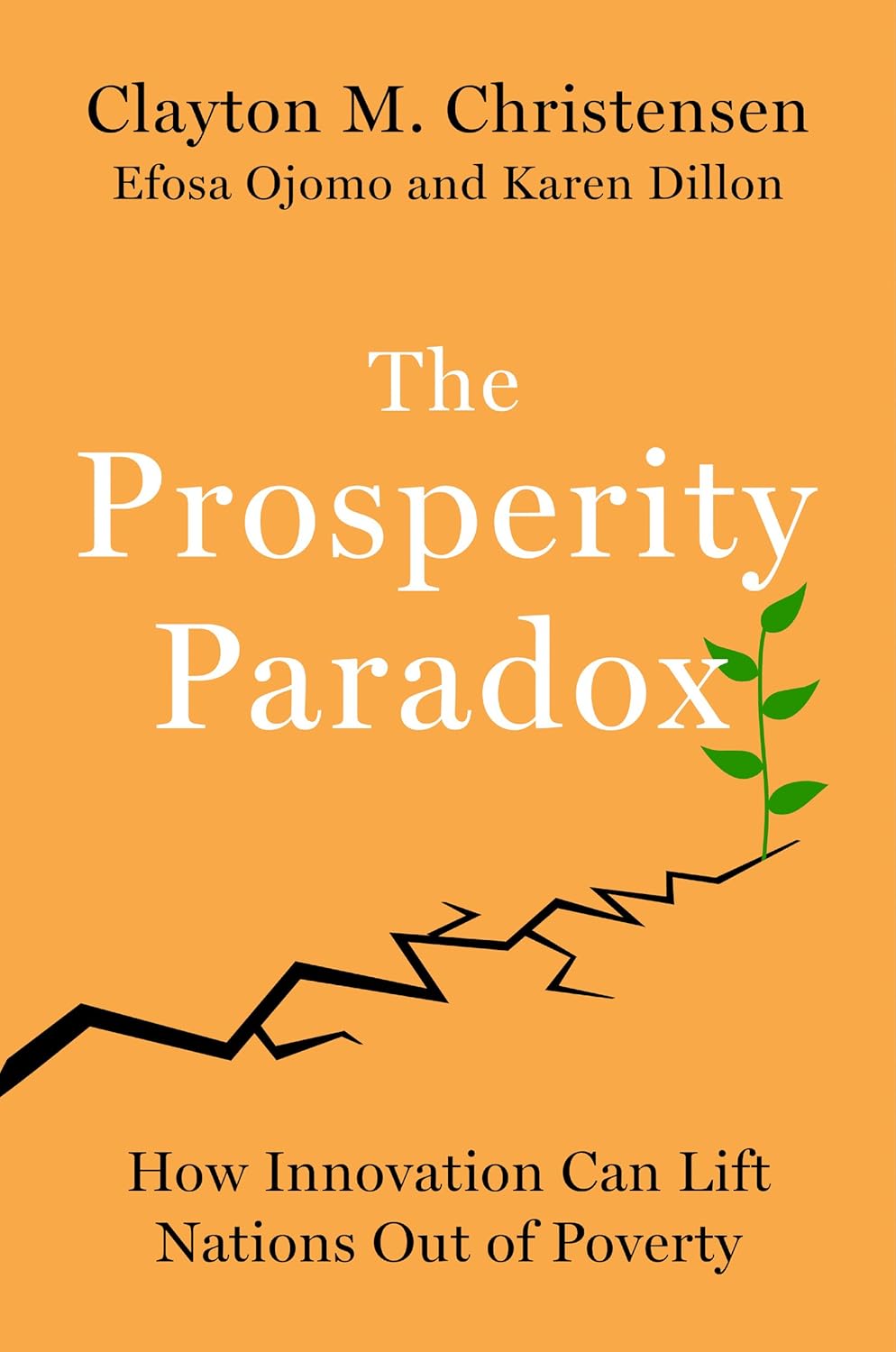
Prosperity Paradox: How Innovation Can Lift Nations Out of Poverty book by Clayton M. Christensen
Prosperity Paradox: How Innovation Can Lift Nations Out of Poverty book by Clayton M. Christensen
Clayton M. Christensen, the author of such business classics as The Innovator’s Dilemma and the New York Times bestseller How Will You Measure Your Life, and co-authors Efosa Ojomo and Karen Dillon reveal why so many investments in economic development fail to generate sustainable prosperity, and offers a groundbreaking solution for true and lasting change.
Global poverty is one of the world’s most vexing problems. For decades, we’ve assumed smart, well-intentioned people will eventually be able to change the economic trajectory of poor countries. From education to healthcare, infrastructure to eradicating corruption, too many solutions rely on trial and error. Essentially, the plan is often to identify areas that need help, flood them with resources, and hope to see change over time.
But hope is not an effective strategy.
Clayton M. Christensen and his co-authors reveal a paradox at the heart of our approach to solving poverty. While noble, our current solutions are not producing consistent results, and in some cases, have exacerbated the problem. At least twenty countries that have received billions of dollars’ worth of aid are poorer now.
Applying the rigorous and theory-driven analysis he is known for, Christensen suggests a better way. The right kind of innovation not only builds companies—but also builds countries. The Prosperity Paradox identifies the limits of common economic development models, which tend to be top-down efforts, and offers a new framework for economic growth based on entrepreneurship and market-creating innovation. Christensen, Ojomo, and Dillon use successful examples from America’s own economic development, including Ford, Eastman Kodak, and Singer Sewing Machines, and shows how similar models have worked in other regions such as Japan, South Korea, Nigeria, Rwanda, India, Argentina, and Mexico.
The ideas in this book will help companies desperate for real, long-term growth see actual, sustainable progress where they’ve failed before. But The Prosperity Paradox is more than a business book; it is a call to action for anyone who wants a fresh take for making the world a better and more prosperous place.
Book Specifications
About Clayton M. Christensen
clayton m. christensen is the kim b. clark professor of business administration at the harvard business school. in addition to his most recent book, compet
View full author profile →
Book Title
You are viewing an alternative format/edition for this title. You can proceed directly to this book's page to complete your purchase.
More Books By Clayton M. Christensen

The Innovator's Solution: Creating and Sustaining Successful Growth book by Clayton M. Christensen
The Innovator's Dilemma: When New Technologies Cause Great Firms to Fail book by Clayton M. Christensen
Competing Against Luck: The Story of Innovation and Customer Choice book by Clayton M. Christensen
Prosperity Paradox: How Innovation Can Lift Nations Out of Poverty book by Clayton M. Christensen
People who bought this also bought
If Life Is a Game, These Are the Rules: Ten Rules for Being Human book by Cherie Carter-Scott
Finding My Virginity: The New Autobiography book by Richard Branson
Touching Heaven: A Cardiologist's Encounters with Death and Living Proof of an Afterlife book by Chauncey W. Crandall
Leading Change: The Argument for Values-Based Leadership book by James O'Toole
Kenya?s 50 Years of Diplomatic Engagement: From Kenyatta to Kenyatta book by Kipyego Rono Cheluget
Working: Researching, Interviewing, Writing book by Robert A. Caro
Financial Intelligence for Entrepreneurs: What You Really Need to Know About the Numbers book by Karen Berman
Zero to One : Notes on Startups, or How to Build the Future book by Peter Thiel
Cold Steel: Lakshmi Mittal and the Multi-Billion-Dollar Battle for a Global Empire book by Tim Bouquet
Lean Thinking: Banish Waste And Create Wealth In Your Corporation book by James P. Womack , Daniel T. Jones
People of the Lie: The Hope for Healing Human Evil book by M. Scott Peck
Closer to God Each Day: 365 Devotions for Everyday Living book by Joyce Meyer
How Democracies Die: What History Reveals About Our Future book by Steven Levitsky
The Improbable War: China, The United States and Logic of Great Power Conflict book by Christopher Coker
The Compound Effect: Jumpstart Your Income, Your Life, Your Success book by Darren Hardy